· K. Larkin · Future-Self Writing · 8 min read
The Best Possible Self Exercise
The best possible self exercise is a simple, research-backed way to write the life you want in real sentences. The study behind it, and how to try it this week.

The Best Possible Self Exercise: Write the Life You Want in Real Sentences
A woman at a workshop once handed me a recipe card, one with a faded strawberry border, and asked me to write down the life I wanted.
I wrote three words. Calm, organized, happy. Then I turned the card face-down on my knee, the way you cover a test.
Those three words could have belonged to anyone in that room of folding chairs. I had written down a mood, and a mood asks nothing of you. It won’t tell you what to do on Monday.
The version I skipped has a name: the best possible self exercise. There is a study behind it, and I found it years too late for that little strawberry card.
This is the exercise, the research under it, and how to do it as a letter to your future self. It’s one thread pulled from the science of writing to your future self: the one a psychologist actually put people in a study to measure.
The Best Possible Self Exercise, and the Study Behind It
The best possible self exercise is short and specific. You write, in detail, about a future in which everything has gone about as well as it reasonably could. This is not the fantasy where you win the lottery. It’s the life where you did the work, and it turned out.
A psychologist named Laura King built the study that gave the exercise its evidence. She gave eighty-one people a plain instruction and twenty minutes to follow it, four days in a row. One group wrote about their best possible self, several years out, told to imagine “everything has gone as well as it possibly could,” that they had “worked hard and succeeded at accomplishing all of their life goals.” A control group wrote about their plans for the day.
Eighty minutes. Four evenings.
That was the whole intervention. And in studies like this one, the best-possible-self writers came away measurably happier within weeks, and five months on had made fewer visits to the health center for illness (King, 2001). Twenty minutes of honest writing, and the effect was still faintly visible in their bodies almost half a year later.
I want to be careful here, because I’d rather undersell this than lie to you. These are lab conditions, and the gains were real but gentle. A lift you could measure and a few less trips to the doctor, not a life rebuilt. Still: gentle and real is a lot for eighty minutes and a pen.
Why Writing About Your Best Possible Self Beats a Mantra
Writing about your best possible self works because it refuses to stay vague. A mantra can survive on three words. A written life cannot.
“Calm, settled, happy” asked nothing of me because it named a temperature, not a day. It didn’t say who I was calm around, or what I had settled into, or what a happy morning would actually contain. An affirmation asks you to feel better about the life you already have. The exercise asks something harder and more useful: describe the life you actually want, in enough detail that you would recognize it if it arrived.
The specificity is the active ingredient. When the future has a texture, a room, a person in the doorway, a thing you do at ten in the morning, it stops being a wish and starts being a set of directions.
That is the difference between the card I hid on my knee and the letter I wish I’d written instead. One was a good feeling I hoped would find me. The other would have told me where to look.
What Putting It in Sentences Forces You to Admit
Full sentences are harder to hide behind than adjectives. That is the quiet gift of writing the life down: somewhere around the third sentence, you catch yourself admitting a want you had been keeping vague on purpose.
The first time I did the exercise as more than three words, I wrote a sentence about a table. A long one, big enough to fold a hundred letters flat. I read it back and understood something I had been too sensible to say out loud. I wanted to make things by hand for a living. The word “happy” had been hiding that for years.
A blurry wish protects you from that moment. If you never write the specific sentence, you never have to notice the gap between the life you’re building and the one you’d choose.
The blur is comfortable.
The blur is also why nothing changes. You can carry “calm, settled, happy” for a decade and never once be cornered by it. Write the real day down, name the table and the work you do at it, and the sentence starts asking you what you’re going to do about it.
How to Write Your Best Possible Self as a Letter to Your Future Self
You don’t need a workshop or a strawberry recipe card. You need paper, twenty minutes, and a willingness to be specific on purpose. A letter to your future self is the best container I’ve found for it, because it makes the whole thing concrete: a real reader, a real date, your own honesty sealed up for later.
This is the shape I use.
- Date it forward. Write to the you who opens the envelope a year from now, and address them by name.
- Describe the day, not the feeling. Where you wake, what’s on the kitchen table, the thing you do at ten in the morning. Texture is the whole point.
- Let it have gone well. King’s instruction is still the best one: imagine you worked hard and it turned out, that everything went about as well as it reasonably could.
- Underline the sentence that startles you. One line will feel truer than the rest, and a little exposed. That’s the want you’d been keeping soft.
- Seal it, and date the outside. A year out, or the next birthday that scares you. Then hide it somewhere later-you will trip over it.
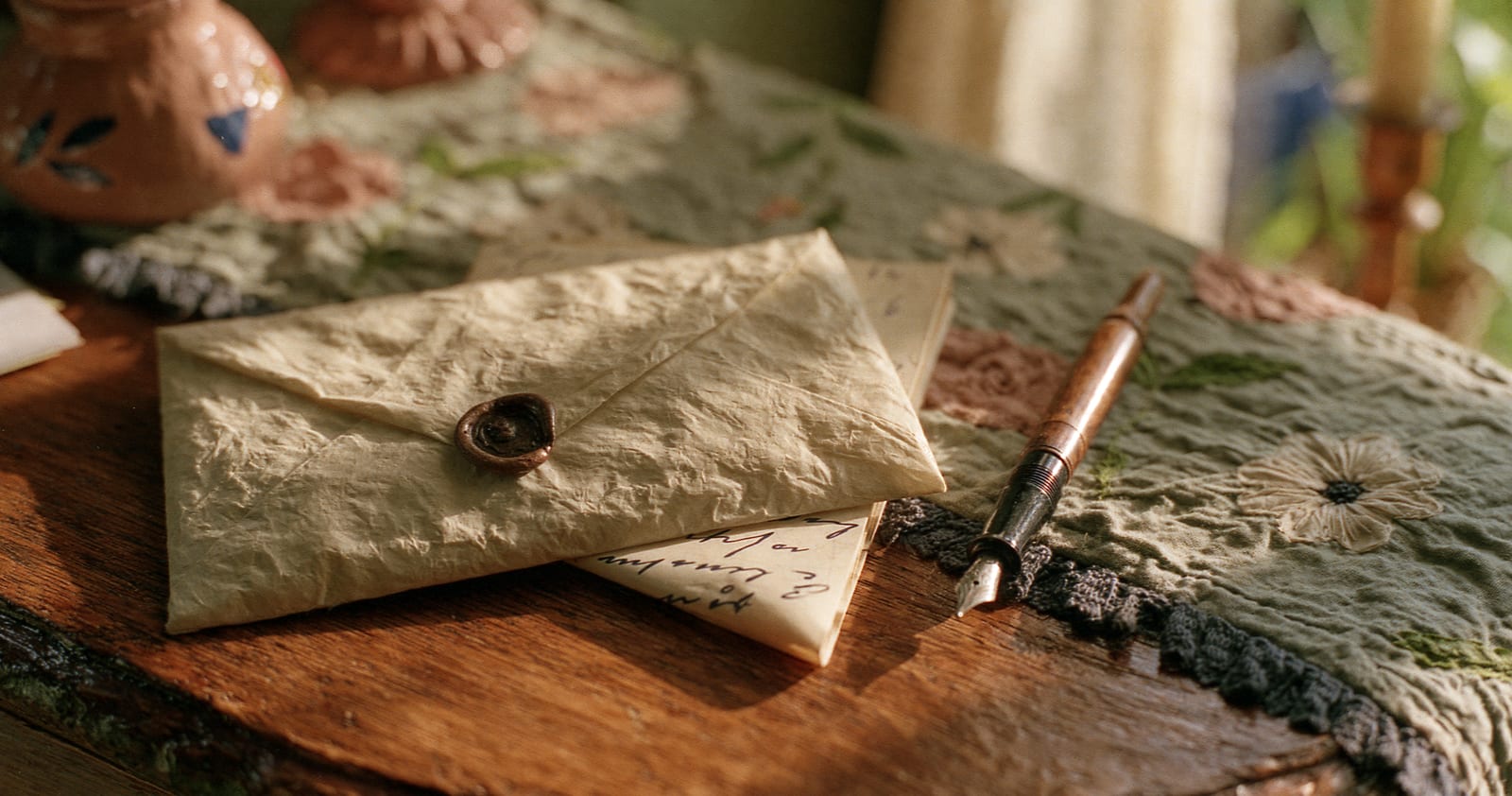
The letter does the specific work the recipe card couldn’t. It hands the wish a body, a face to answer to, and a date it has to come true by. And when you open it, you get to find out how much of that day you actually built.
Start With One Sentence
The recipe card is still in a drawer somewhere, three shy words face-down. I don’t hold it against myself. I just know now what it was missing, and it wasn’t hope. It was detail.
Write the specific version this week. One year out, one real day, the sentence that startles you left in.
If you’d like the practice to keep a rhythm without you having to manage it, the Kind Edition is the slow-mail form of this. You write once a week, and we mail your own words back to you each month, so the best possible self stops being a workshop exercise and becomes a habit. And if you’d rather start free, Your Wisest Friend, our free newsletter named for the idea that the wisest friend you have is your future self, sends quiet prompts and good reading, no rush and no spam.
FAQ
Q: What is the best possible self exercise?
A: It is a short writing practice: for about twenty minutes, you describe a future in which you have worked hard and everything has gone about as well as it reasonably could. Psychologist Laura King studied it, and found it lifted well-being within weeks, with fewer illness visits months later.
Q: Does the best possible self exercise actually work?
A: In studies, yes, in modest and real ways. Laura King’s participants wrote for twenty minutes a day over four days and came away measurably happier, and months later had made fewer trips to the health center. The effect is a genuine lift, not a cure. Specific writing helps most.
Q: How is writing about your best possible self different from affirmations?
A: An affirmation repeats a mood, like “I am calm.” Writing about your best possible self describes a specific future in full sentences: the day, the room, the work you did to get there. The detail is what makes it stick, and what an affirmation never asks of you.
Q: How do I do the best possible self exercise as a letter?
A: Address a letter to yourself one year out. Describe a real day in the life you want, imagining you worked hard and it went well. Underline the sentence that surprises you. Seal it, date the outside, and hide it where later-you will find it.
Q: How long should the best possible self exercise take?
A: About twenty minutes is plenty, and King’s study ran it four days in a row. You can do it once as a single letter, or return to it. Shorter and specific beats long and vague. One honest page you would recognize beats five pages of adjectives.
Your friend and fellow letter lover, K. Larkin 💌
Before Dear Future Self, K. Larkin trained to carry the mail and fell in love with real letters and how they made people smile. She founded the club after she began writing to a future self she’d long treated like a stranger, and now folds and mails every letter by hand.