· K. Larkin · Future-Self Writing · 8 min read
Why You Give Better Advice Than You Take
Solomon's paradox explains why we give better advice than we take. The science of self-distancing, and how a letter to your future self hands it right back.

Why You Give Better Advice Than You Take: Solomon’s Paradox and the Letter That Closes the Gap
My friend called on a Sunday to decide whether to give up the pottery studio she hadn’t touched in a year.
Two hundred dollars a month for a door she never opened. I knew before she finished. Let it go, I told her. You’re paying rent on a version of yourself who already moved on.
That same month, I was renewing the web address for a business I’d quit in my head two years back. Same ghost. Same rent. I could not see it.
The old puzzle is this: why do we give better advice than we take?
It’s one of the most human things about us, and one of the best-studied.
The King Who Was Wise to Everyone but Himself
The paradox is named for Solomon, the king who advised a whole kingdom brilliantly and made a wreck of his own house.
In the old stories he was the wisest man alive. People traveled for miles to lay their quarrels at his feet, and he’d settle them in a sentence. The famous case: two women, one baby, both claiming it. He offered to cut the child in half, and the true mother’s flinch gave her away. Wisdom to spare, for anyone who asked.
His own life ran the other direction. Too many alliances, too many bad choices at home, a kingdom that cracked in two after he was gone. Clear-eyed at the gate, blind in his own doorway.
Psychologists borrowed his name because the pattern is ours too.
Why We Give Better Advice Than We Take
In studies, people reason more wisely about someone else’s problem than about their own identical one. Same facts, different vantage point, different quality of thought.
Two psychologists, Igor Grossmann and Ethan Kross, set this up cleanly. They handed people a painful, specific scenario: a romantic partner had been unfaithful. Half were asked to picture it happening in their own relationship. Half pictured the same betrayal happening to a close friend. Then everyone reasoned out loud about what should come next.
The friend’s version drew wiser thinking, again and again. People weighing a friend’s heartbreak were more willing to look for a compromise, more ready to admit the limits of what they could know, quicker to grant that people and circumstances change (Grossmann & Kross, 2014). Handed their own identical betrayal, that same good sense went dim. Same person. Same facts. The only thing that moved was whose life it was.
I recognized myself in one paragraph of that study. The clarity I had for my friend’s pottery studio, and the fog I stood in over my own dead website: there we both were, on the page.
The Fix Has a Name: Self-Distancing
Grossmann and Kross also found the fix, and it’s almost suspiciously small. Reflect on your own problem as if it belonged to someone else.
They call it self-distancing. Instead of stewing from inside your own head, in the language of “why is this happening to me,” you step back and look at the situation from the outside, in the third person, the way you’d look at a friend’s. When people did that with their own problems, the gap closed. Distanced from their own mess, they reasoned about it nearly as well as they would about a stranger’s.
The effect held for the young and the old alike. The same test run on people in their twenties and people past sixty gave the same result: back up far enough and the wisdom comes back on. It turns out to be less a fixed trait than a matter of where you’re standing.
The trick is getting far enough back.
A Letter Builds the Distance In
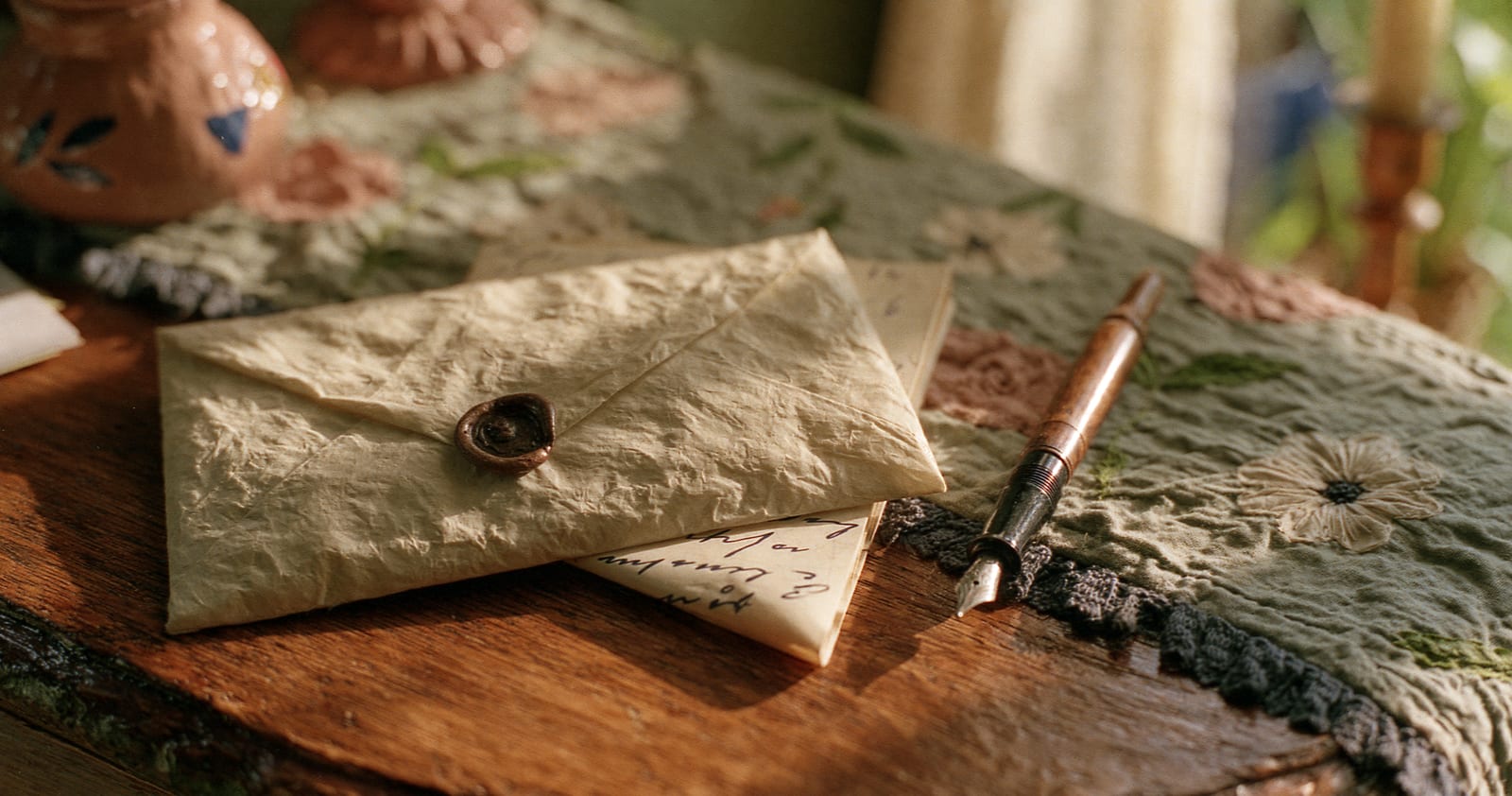
A letter to your future self does the stepping back for you. You aren’t writing to yourself, exactly. You’re writing to a version of you a year down the road: close, but not quite you.
That small gap is all we need. When you address the person who’ll read this next spring, your own situation stops being the weight on your chest and becomes something you can hold at arm’s length and turn over. You start asking the questions you’d ask for a friend. What do they actually want here. What are they afraid of. What would you tell them to do.
Because it’s on paper, addressed and dated, you can’t fudge it the way a passing thought lets you fudge. The page makes you commit. A letter is self-distancing you can hold in your hand.
That distance is a close cousin of the stranger effect at the center of the science of writing to your future self: your brain already files the future you a shade closer to “someone else,” and that shade is exactly the vantage point where your judgment sharpens.
Counsel From Your Wisest Friend (Who Is You)
Written this way, a letter can feel less like journaling and more like sitting down with the wisest friend you have. The strange part is that the friend is you.
You already own the good judgment. You proved it the last time you talked someone off a ledge, or told her plainly to leave, or to stay, or to rest a while. The counsel was sound. It was only pointed the wrong way, at everyone but yourself.
A letter turns it around. You write from the calm, clear place you go to when you’re helping someone you love, and for once you aim it at your own life. What comes back, weeks or months later when you break the seal, reads like advice from someone who knew you completely and wanted nothing but good for you.
Because someone did. Because someone does.
The kindest voice you’ll read all year might be your own, mailed from a season you’ve half forgotten.
How to Give Yourself the Advice You’d Give a Friend
You can try this in the next ten minutes, with nothing but paper and a stamp you won’t use yet. Write to yourself a year out, by name.
Then, before you get into what’s true, change the camera angle. Describe the thing you’re stuck on the way you’d describe a friend’s situation to another friend: “They’ve been offered a job across the country and they’re terrified to take it.” Third person. From the outside, where you can see.
Now answer it the way you’d answer for them. Name what they actually want. Name the obstacle they keep walking around and won’t say out loud. Name the one small step you’d gently push them toward.
Sign it, seal it, set a date. When you open it, you’ll be reading advice you were somehow able to give and never able to take, handed at last to the one person who couldn’t hear it at the time: you.
FAQ
Q: What is Solomon’s paradox?
A: Solomon’s paradox is our tendency to reason more wisely about other people’s problems than our own. It’s named for the biblical king who counseled his kingdom brilliantly while his own household fell apart. Psychologists Grossmann and Kross documented it in 2014. Distance, not intelligence, is the missing piece.
Q: Why do we give better advice than we take?
A: Because we see other people’s problems from the outside and our own from the inside. In studies, that outside view makes us more willing to compromise, admit what we don’t know, and expect things to change. Standing inside our own problem, that clarity dims. The fix is manufacturing some distance.
Q: What is self-distancing?
A: Self-distancing means reflecting on your own situation as if it were happening to someone else, often in the third person. In Grossmann and Kross’s research, this small shift closed the gap between the wise advice people gave others and the poorer reasoning they used on themselves, in young and old alike.
Q: How does writing to your future self help?
A: A letter is addressed to a version of you a year ahead, close but not quite you. That built-in distance lets you consider your own life the way you’d consider a friend’s, which research links to wiser thinking. You end up giving yourself the advice you’d normally save for other people.
A Last Word
My friend let the studio go. A week on, I heard the relief in her voice, the particular lightness of stopping a small bleed you’d stopped noticing. It took me longer with my own dead website. I let it lapse the month I started writing letters to myself in earnest, which is probably not a coincidence.
That’s the quiet gift of it. You get to borrow the clear-eyed friend you’ve always been for everyone else, and point them, finally, at your own life.
If you’d like the practice to hold steady instead of staying a good intention, the Kind Edition is the slow-mail version: you write once a week, and we mail your own words back to you each month, so the wisest friend you have keeps turning up in your mailbox.
Or if you’d rather start free, Your Wisest Friend, our free newsletter named for the idea that the wisest friend you have is your future self, sends quiet prompts and good reading, no rush and no spam.
Either way, write the first one this week, in the third person if you have to. The advice you keep giving away is welcome home.
Your friend and fellow letter lover, K. Larkin 💌
Before Dear Future Self, K. Larkin trained to carry the mail and fell in love with real letters and how they made people smile. She founded the club after she began writing to a future self she’d long treated like a stranger, and now folds and mails every letter by hand.