· K. Larkin · Future-Self Writing · 8 min read
Letter to Your Future Self: How to Start
A quiet, practical guide to writing a letter to your future self, the research that explains why it works, and how to start.
There’s a person in your house you barely know. They’ll be there tomorrow and next year and twenty years from now. They live with the consequences of every decision you make, and the relationship you have with them is, on most days, the relationship you’d have with a stranger.
You don’t think of them at all. :-/
Your brain doesn’t quite believe in your future self. It’s wired to get what you want NOW.
Hal Hershfield, a psychologist at UCLA, has spent over a decade watching this on brain scans: when most of us imagine our future selves, the parts of the brain that light up are the same parts that light up when we picture someone we’ve never met.
That stranger costs us. We save less for them. We make commitments they’ll have to keep. We eat in ways they’ll feel.
The fix is mostly getting to know that person and making them real. The closer the relationship between you and your future self, the better the decisions you’ll make on their behalf. People who feel that closeness save more, take fewer reckless risks, and treat themselves more kindly.
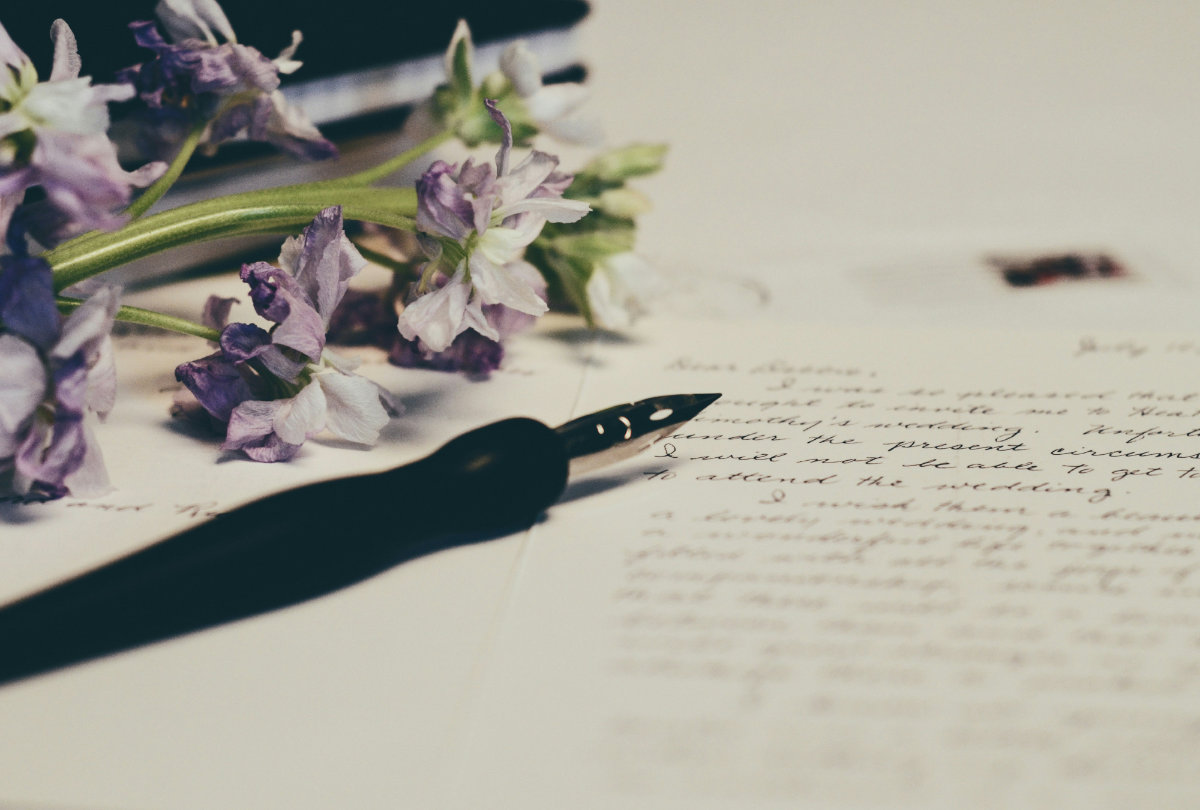
The simplest tool for closing the gap is also one of the oldest: write your future self a letter!
I watched this work for ten years before I knew there was research about it.
When I taught music, the hardest moments for a student were when they were assigned a piece that felt strange, unfamiliar … and impossible!
They’d open the score and stare at a sea of black and white and get overwhelmed. They’d do that all week. And the next week, when they came back, they would sometimes burst into tears and tell me it was impossible, and they’d never be able to learn it.
That’s when I would ask them to write a letter to themselves about how impossible it was and how they were certain they’d never be able to do it. We’d fold the letter up, seal it in an envelope, date it, and I would put it in my teaching drawer.
A year later, when the piece was easy and they were staring at another impossible pieced, I’d pull it out. They’d read it and giggle a little. I’d have them play that old, impossible piece. Every time, they couldn’t remember being the person who wrote it!
After that, we’d talk about chipping away at the new piece, and the most important thing—
—they’d believe just a little bit more that they might actually be able to master what felt impossible.
What writing a letter to your future self is: it’s creating a relationship with your future self so that when our innate human NOW focus has you reaching for the potato chips, you’ll remember your future self. You’ll care about your future self, and you’ll be kind to your future self.
What a Letter to Your Future Self Actually Is
A letter to your future self is a short note you write today and read at a later time, in a month, a year, ten years—whatever helps you mark the moment.
The mechanic is small. The effect, if you do it more than once, is not.
What Changes When You Keep Doing It
The first letter you write to your future self does small work. A month later, when you read it, you feel a flicker of recognition, maybe a slight tenderness. That’s the future person beginning to feel real.
The second letter does more. By the time you’ve written ten or twelve, something quiet has shifted: you start making decisions with them in the room. The version of you who said yes to one too many things finds it easier to say no, because you remember writing to a future you who would have to live with the yes.
Several years in, the practice is no longer about producing letters. It’s about the relationship the letters built. You make decisions you would not have made before, because the person they affect is now known to you.
You don’t have to believe me! Write one letter and read it in a month. Notice what you feel! Maybe nothing. Maybe more time is needed to create a relationship, get to know each other … get on the same page.
How to Start (Without Making It a Project)
The most common way this practice fails is also the most predictable: people decide to start journaling. They buy the journal, plan the time, choose the pen. By the second week, the journal is on the nightstand. By the second month, they’ve stopped noticing it.
A letter is a different shape from a journal. A journal asks you to show up day after day, build a habit, fill the pages in order. A letter asks you to write one thing, one time, and send it somewhere it will wait for you.
For a single letter, no expensive paper is required. The page you write on can be the back of a receipt or a note in your phone, or a free email service like FutureMe, which lets you schedule a message to yourself up to a year in the future.
The format that finally got me to start was the simplest one. I sat down on a Sunday with a piece of printer paper and wrote:
Dear Future Me,
Today I am twelve weeks into a year that feels harder than I expected. I want you to know that I care for you. I don’t want you to feel this way. I will do everything in my power to make sure that when you read this, things are a little bit better for you.
You are special, and you deserve good things.
Love,
Old Me
Five minutes! No good handwriting or pretty words required! The letter is me making a commitment to my future self.
What to Write About
The most useful letters to your future self are specific. Vague letters age into nothing. Specific ones age into evidence.
A few starting points, pick one:
- The thing that’s hard right now and what you’re doing about it
- Something small you noticed today that you don’t want to forget
- A decision you’re afraid of, and your honest reasoning either way
- A person who is currently kind to you, and the smallest specific thing they do
- What you hope will be different in a year, named plainly
- What you’d like to still be true in a year, named plainly
These are not journaling prompts in disguise. They are letter prompts, which means they have a recipient. Picture them: they are you, slightly different, slightly later. Write to them like they are real.
When to Read It Back
A month is enough time to feel the gap. A year is when the practice gets strange and good. Five years in, it becomes something else entirely, the kind of artifact you keep in a wooden box and don’t show people.
If you can, mail the letter to yourself or schedule it. The forgetting is part of the gift. A letter you remember writing teaches you less than a letter that arrives as a small surprise on a Tuesday in November, in your own handwriting, the assurance that someone cares for you and has your back.
FAQ
Q: How long should a letter to your future self be?
A: It’s your letter! You can make it as long or as short as you would like!
Q: How far in the future should I send it?
A: A month is a good first step. You’ll have forgotten enough to feel the gap, but not enough to disorient yourself. After your first one, try a year! A year is when the practice tips from interesting to genuinely useful, because the person who reads it has changed enough to be moved.
Q: What if my future self isn’t the person I hoped they’d be?
A: Then the letter is even more useful! The practice isn’t about predicting your future or designing it. It’s about leaving a kind, honest witness for whoever is reading, creating a relationship with your future self, and a reminder that someone cares about you!
Q: Does it have to be a paper letter, or can I email it?
A: Either works! Email is faster and freer. Paper is harder to delete and easier to keep. Paper letters tend to get reread, tucked into books, and found again decades later.
A Small Invitation
If you’d like a ready-made page to write on, I made a free printable letter kit: a one-page guide and a two-page letter to fill in. Print it, seal it, and write Do not open until on the front. Get the free printable here.
If you’d like to do this with a quiet monthly nudge, the Kind Edition is the slow-mail version of this practice. You answer a short reflection prompt each Sunday; once a month, an envelope arrives in your mailbox with your own past words inside, returned to you with a little time and distance attached.
If you’d rather start with the free version, the Dear Future Self newsletter lands in your inbox monthly with prompts and quiet reading. No spam; real letters!
Either way, start with one letter. The hard thing today becomes the evidence later.
Your friend and fellow letter lover, K. Larkin 💌