· K. Larkin · Future-Self Writing · 8 min read
What to Write in a Letter to Your Future Self (Prompts & Examples)
Not sure what to say? Here are warm prompts, real examples, and a free printable for writing a letter to your future self, plus how to start in fifteen minutes.
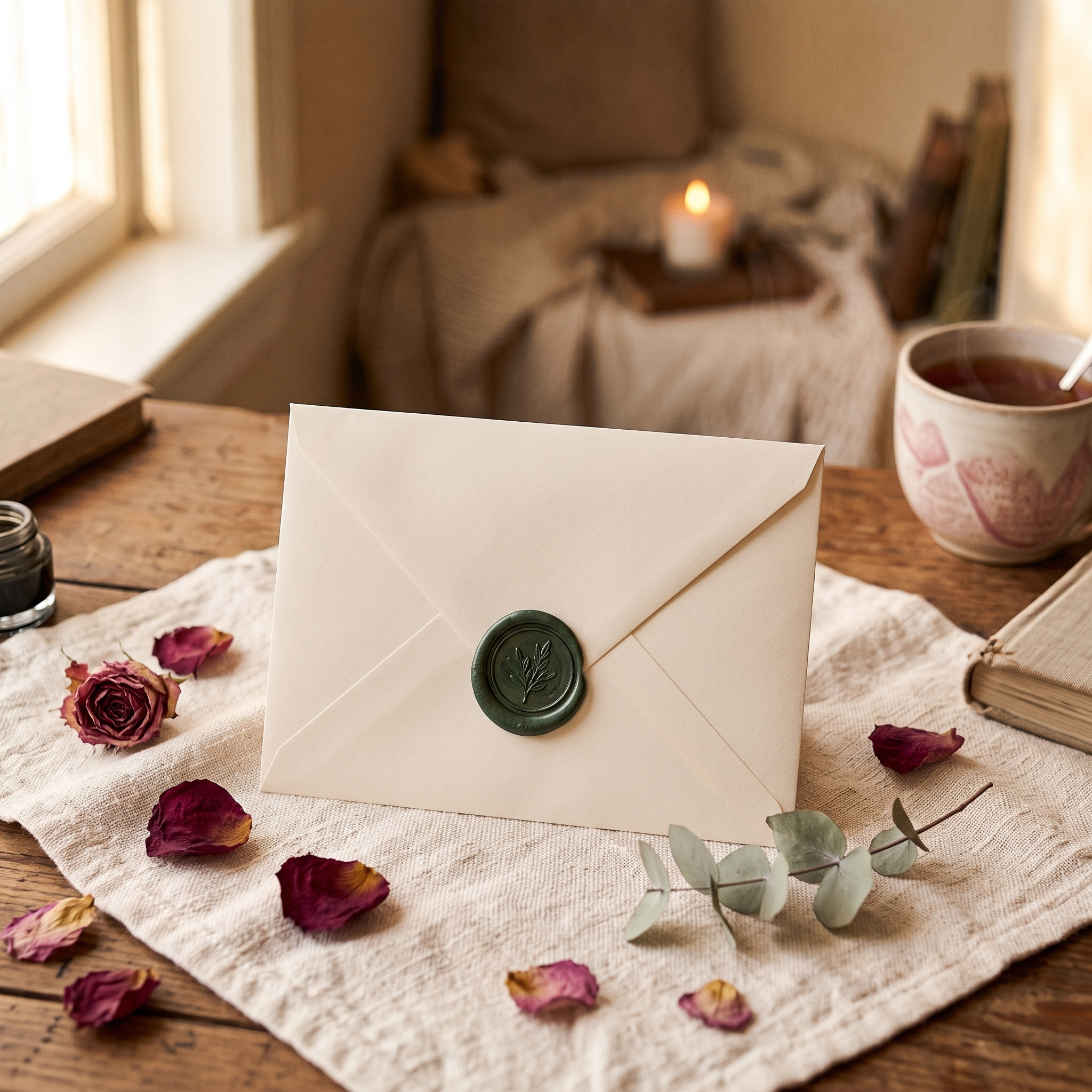
The short version: Write to your future self the way you’d write to a friend you love. Be specific about the small, ordinary things (the song stuck in your head, the shape of your mornings). Be honest about what you’re carrying. Name one thing you’re reaching for. Below are the prompts, a few real examples, and a free printable to write yours today. (Updated July 2026.)
You sit down to write a letter to your future self, and the page goes wide and empty. What do you even say to someone you haven’t met yet?
Here’s the good news: a letter to your future self is simpler than the blank page makes it feel. You are not writing an essay, or a five-year plan, or anything anyone will grade. You are writing a short, honest note to a real person, you, a little further along, who will be so glad you did.
If you want the science of why this small act changes the decisions you make (it does, and it’s lovely), that’s in how to start a letter to your future self.
This page is the practical one: what to actually put on the page.
What to write in a letter to your future self
Be specific. The ordinary details are the magic. A year from now you won’t remember the song stuck in your head, or the exact shape of your mornings, or who you came home to. Those small things are what make the you who reads this feel like you, and not a stranger. Vague letters age into nothing. Specific ones age into evidence.
Be honest. No one is grading this. You don’t have to sound brave, or sorted, or fine. Say what you’re actually carrying. The honest letter is the one that means the most when it’s opened.
Be kind. Write the way you’d write to a friend you love, not a lecture, not a to-do list. The person reading this is doing their best out there, the same as you are right now.
That’s the whole craft. The prompts below just help you find the words.
Prompts to get you started
Pick one from a few of these groups. You don’t need all of them. Three good, specific answers make a letter worth keeping.
The small, true things (your today)
- The song stuck in your head this week.
- What your mornings actually look like, start to finish.
- Who or what you come home to.
- What’s within arm’s reach right now, as you write.
- The last thing that made you laugh out loud.
- A small comfort you’re leaning on these days.
- The weather today, and what you did about it.
What you’re carrying (be honest)
- The thing that’s hard right now, and what you’re doing about it.
- A worry you keep circling back to.
- Something you’re quietly proud of that nobody else knows.
- A decision you’re afraid of, and your honest reasoning either way.
- What you’re tired of.
- A hope you’re almost embarrassed to admit.
What you’re reaching for (the shape of the life)
- What you want to be different in a year, named plainly.
- What you hope is still true in a year.
- The kind of day you want more of. Describe one, hour by hour.
- Someone you want to become a little more like, and why.
- The thing you keep saying you’ll do “someday.”
- What a good life looks like to you right now, in plain words.
Questions for your future self (they answer these on opening)
- Did the thing I’m afraid of turn out okay?
- Are you still doing the thing I love right now?
- What do you know now that I don’t?
- Are you being kind to yourself?
- Did we keep the promise?
For a birthday, a new year, or a hard season
- Birthday: what this year taught you, and what you’re carrying into the next.
- New Year: one thing you refuse to bring into the new year with you.
- A hard season: a note of care to the you who is still in it. “I know it’s heavy. Here’s what I want you to remember.”
- A new baby, home, or job: what today feels like, before it becomes ordinary.
- A milestone ahead: a letter to open at thirty, forty, fifty. What you hope you’ll have made room for.
A few examples you can borrow
An ordinary day:
Dear Future Me, It’s July and nothing is happening, which is its own kind of gift. The dog is asleep on my feet. I had toast. I’m a little worried about money, and a little worried I’m wasting my one life on small days like this one. I don’t have an answer. I just wanted you to know I was here, paying attention. Love, Me, today
A hard season:
Dear Future Me, I’m in the middle of a year that turned out harder than I planned for. I want you to know I’m doing what I can to leave things a little better for you than I found them. You are not as alone as you feel right now. Please be gentle with us. Yours, Old Me
A good day worth keeping:
Dear Future Me, Today was good, and I want you to have proof that good days happen to us. We walked down to the water. Someone we love called for no reason at all. Read this on a day that isn’t like this one, and remember it comes back around. Love, Me
How to write yours in fifteen minutes
- Set a timer and get one sheet of paper, or open a note on your phone.
- Start with “Dear Future Me,” and today’s date.
- Pick one prompt from a few of the groups above. Don’t overthink which.
- Write like you’re talking to a friend. No good handwriting or pretty words required.
- End with one promise you can actually keep, and one question for them to answer. Then fold it, seal it, and write Do not open until and a date on the front.
That’s it. You’re done. The hard part was only ever starting.
When to open it, and where to keep it
A month is enough time to feel the gap. You’ll have forgotten enough small things to be surprised by your own note. A year is when the practice gets strange and good, because the person reading it has changed enough to be moved. Five years in, it becomes something else entirely, the kind of artifact you keep in a box and don’t show people.
A few things to seal in, so future you has something to answer:
- The date you’re allowed to open it.
- One question only they can answer.
- A promise, so they know you were thinking of them.
Then put it somewhere you’ll stumble on it later. The forgetting is part of the gift. A letter you remember writing teaches you less than one that arrives as a small surprise in November, in your own handwriting, telling you that someone had your back all along.
Get the free printable letter kit
Want the whole thing in one lovely place to keep?
I made a free printable: a one-page guide and a two-page letter to fill in, built from the prompts above. Print it, write yours by hand, seal it, and write Do not open until on the front. It’s yours to keep, no strings.
Get the free printable letter kit →
FAQ
How long should a letter to your future self be?
As long or as short as you like. A few honest sentences beat a full page of trying to sound wise. The example letters above are five minutes each, and they work.
What should I write if my life feels boring right now?
Write the boring things anyway. What feels ordinary to you today is exactly what future you will have forgotten and will most want back: your small routines, the people around you, the shape of a normal day. Boring-to-you-now is precious-to-you-later.
When should I open it?
A month is a good first step. After that, try a year. A year is when the practice tips from interesting to genuinely useful, because the person who reads it has changed enough to feel the distance.
Do I have to write it by hand?
Paper gets kept, tucked into books, and found again years later, and writing by hand tends to slow us down into honesty. If you can, use paper.
Start with one letter
If you’d like a quiet monthly nudge to keep this going, the Kind Edition is the slow-mail version of this practice: a short reflection each week, and once a month a real envelope arrives in your mailbox with your own past words inside.
If you’d rather start free, the Dear Future Self newsletter lands monthly with prompts and quiet reading.
Either way, write one letter today. The ordinary day you almost didn’t bother to describe becomes the gift, later.
Your friend and fellow letter lover, K. Larkin 💌